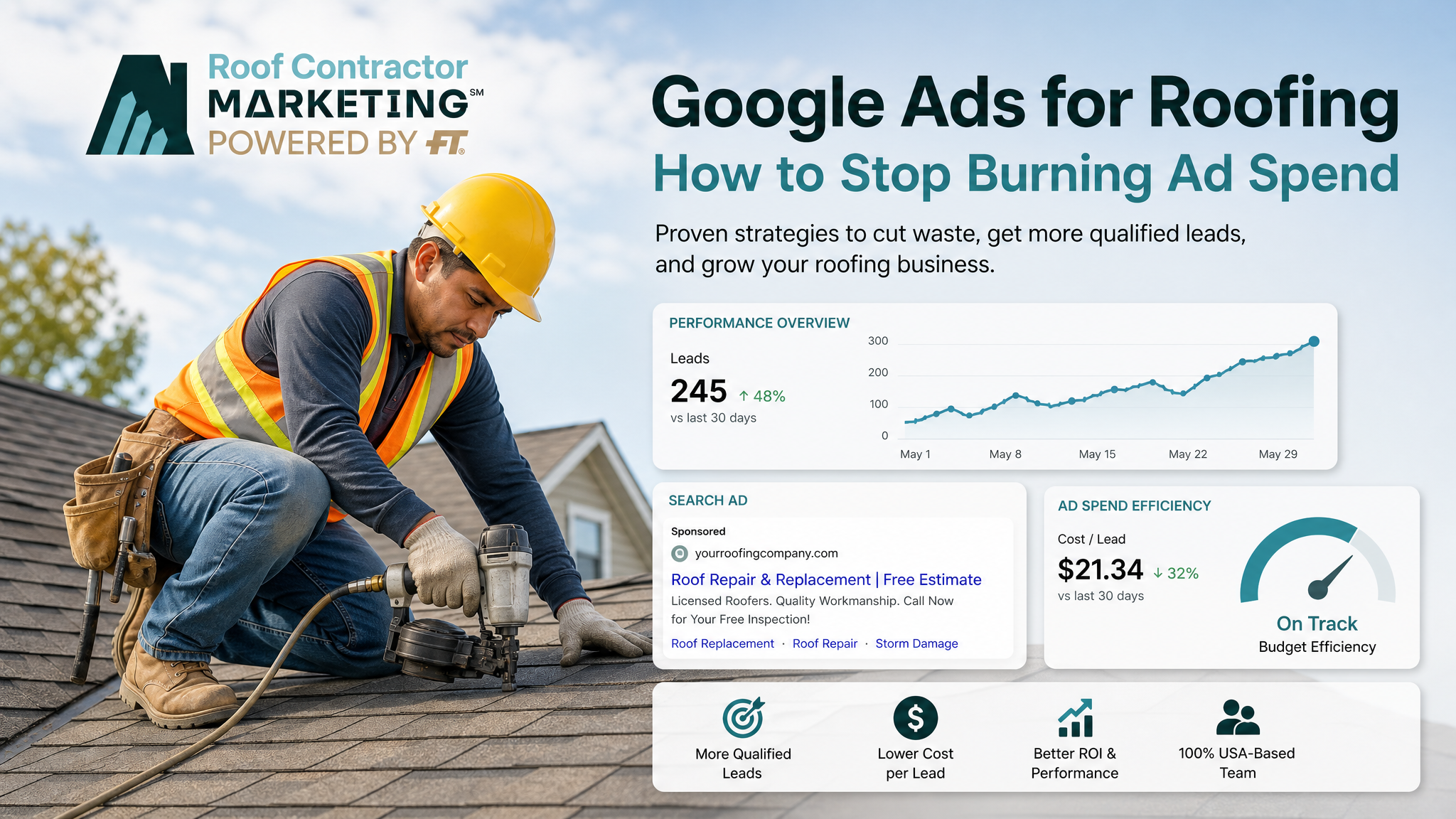
Most owners tell the same story about Google Ads for roofing: four thousand dollars gone in six weeks, a pile of tire-kicker calls, and no clear answer on what happened. Google Ads for roofing does work. It only works when the account is built around how roofs actually get sold, not around a template. That’s the part most agencies skip, and it’s where Roof Contractor Marketing starts.
Why Most Roofing PPC Accounts Bleed Money
Broad Keywords Eat the Budget First
Turn on broad match and you’ll pay for “roofing school,” “roof rake,” and “how to shingle a shed.” We’ve audited accounts where 40% of spend went to searches with zero buying intent. Nobody caught it for months. The clicks looked fine on the dashboard.
Tighten Match Types and the Radius
Phrase and exact match keywords, a real negative list, and a service radius that matches your crews. If you won’t drive 45 minutes for a repair, don’t bid there. Our roofing paid media team rebuilds negative lists monthly as new junk searches show up.
Local Services Ads Belong at the Top of the Plan
The Green Checkmark Nobody Scrolls Past
Local Services Ads sit above regular search ads with a Google Guaranteed badge. Homeowners trust that badge. You pay per lead instead of per click, and Google routes calls to whoever answers fastest. Speed matters here. Slow pickup means fewer leads tomorrow.
Get Screened, Then Keep Feeding It
Background checks, license verification, and insurance docs come first, so start the Local Services Ads setup early. After approval, review volume and response time drive your position. Ask every completed job for a review. That’s the ranking lever most roofers ignore.
Build Search Campaigns Around Job Type
A Repair Lead Isn’t a Replacement Lead
“Roof leak repair” and “roof replacement cost” are different buyers with different margins. Dump them in one campaign and the cheap repair clicks will starve your replacement budget. Same for TPO commercial bids. Commercial searches cost more and convert slower.
One Campaign Per Job Type
Split repair, replacement, storm restoration, and commercial into separate campaigns with their own budgets and ad copy. Then track conversions per campaign so you can shift money toward the work you want. Google’s own conversion tracking documentation covers the setup, and it’s non-negotiable.
Landing Pages Decide Your Cost Per Lead
Homepage Traffic Converts Poorly
Sending every click to your homepage forces the homeowner to hunt for what they searched for. They won’t. They’ll hit back and call the next roofer. A slow page makes it worse, especially on phones during a storm week.
One Page Per Service and City
Match the page to the search: a metal roof page for metal roof searches, a Tulsa page for Tulsa searches. Short form, phone number in the header, real photos, financing details. Many of our clients see a 10% conversion rate against the 3.75% national average with pages built this way.
Call Tracking, or You’re Guessing
Roofing Leads Come by Phone
Roofing buyers call. If you can’t tell which keyword produced the call, you can’t tell which half of your budget is wasted. Owners in the trade press and on forums like Roofers Coffee Shop say the same thing constantly.
Score Every Call, Not Just Count It
Use dynamic number insertion so each campaign gets its own tracking number, then grade calls: booked, quoted, junk, wrong area. Twenty calls that produce two inspections is a different result than twenty that produce eight. Score them weekly.
Budget, Seasonality, and Storm Timing
Hail Doesn’t Respect Your Monthly Cap
An Oklahoma hailstorm can triple search volume overnight, and a flat daily budget means your ads go dark by 10 a.m. while competitors take the calls. Then January comes and the same budget overspends on nothing. Seasonality gets ignored constantly.
Keep a Storm Reserve and Adjust Weekly
Hold back 20% to 30% of annual ad spend for storm response, and move budget between repair and replacement as the season shifts. Results vary by market and competition, but reactive budgeting beats set-it-and-forget-it every time we’ve tested it.
Frequently Asked Questions
Q: How much should a roofing company spend on Google Ads each month? A: Most roofing contractors need at least $2,000 to $3,000 in monthly ad spend to gather enough data in a competitive metro, plus management. Smaller markets can work with less. We’ll tell you honestly if your budget isn’t enough to compete yet.
Q: How long before roofing Google Ads produce leads? A: Calls often start in the first week or two, since paid search shows up immediately. Real optimization takes 60 to 90 days as negative keywords, bids, and landing pages get tuned. Local Services Ads add lead time for the screening process.
Q: Am I locked into a long contract? A: No. Our monthly programs are built to keep clients through performance, not paperwork. You own your ad account, your data, and your tracking numbers.
Find Out Where Your Ad Spend Is Actually Going
You don’t need another dashboard. You need someone to open the account and show you which searches wasted money last month. Our 100% USA-based team has been doing that for roofing contractors for 25+ years. Request a free website and ad account audit and we’ll walk you through exactly what we find, no obligation.